Published Functions
A published function is a single function that does one thing, written once and called from any channel that needs it, such as calculating a patient's age from a date of birth, say. Both local mappings and published mappings can call published functions, which is what makes them worth extracting: the logic lives in one place and every caller picks up a fix.
The distinction from a published mapping is scope. A published mapping is a collection of mapping functions; a published function is one function with one job.
Note
Published functions are cached when a channel starts and are only reloaded when the channel is restarted. After editing a published function, restart every channel that uses it for the change to take effect. Find Usages tells you which channels those are.
Managing Published Functions
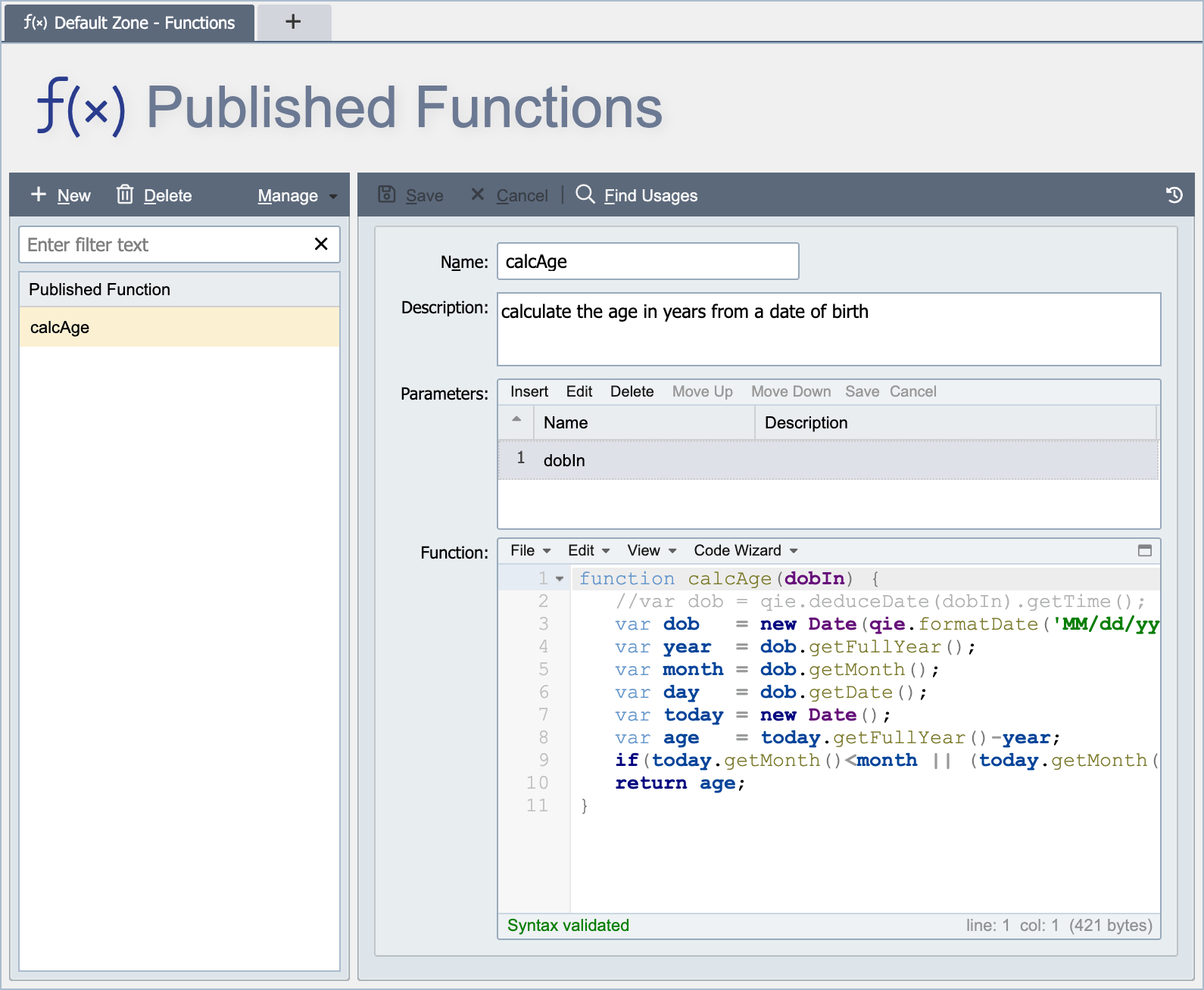
Published Functions are managed from the Published Functions Page. Published Functions are defined at either the global level or the zone level (see Global vs. Zone Scope for more information). A published function is used to help eliminate duplication of commonly used functions allowing functions to easily be modified and keep up to date. An example published function may be set up specifically to calculate the age of a patient. It may be that you need to apply this function across multiple interface channels. So in this case it makes sense to develop the logic in a published function and then reference it on each individual channel or mapping that may need it.
Name
The name associated with the published function identifies the function for use in channel configurations. The name must be unique within the applicable scope. For example, a published function created at the global level must have a globally unique name. A globally unique name is unique within the global published functions and across all zone level published functions. A published function created at the zone level must have a name unique to that zone and all global published functions.
Description
The description is only visible from the published mapping page and can be used to provide additional information about the published mapping and how it is used.
Example Code
When creating a function, you can enter one or more parameters or values that you intend to pass to the function. Click on the insert button in the parameters menu and give each parameter a name and a description of what it is and how it is used.
Once created, a function looks like this:
function calcAge(dobIn) {
  //var dob = qie.deduceDate(dobIn).getTime();
  var dob = new Date(qie.formatDate('MM/dd/yyyy', qie.deduceDate(dobIn)));
  var year = dob.getFullYear();
  var month = dob.getMonth();
  var day = dob.getDate();
  var today = new Date();
  var age = today.getFullYear() - year;
  if(today.getMonth() < month || (today.getMonth() == month && today.getDate() < day)){age--;}
  return age;
}
The syntax for calling this function would look like this:
Deprecating a Published Function
QIE has no @Deprecated marker for published functions, but a simple rename convention serves the same purpose and surfaces stragglers before deletion:
- Rename the function with a
zz_prefix (for example,zz_calcAgereplacingcalcAge). The prefix sorts it to the bottom of the function list, making the deprecation visible to anyone editing a mapping. - From the published function's row context menu, run Find Usages to list every channel, mapping, and script that still calls it. See Find Usages for what the result lists and how to navigate to each reference. A calling script that contains a syntax error is listed as unverified, because the call cannot be confirmed until the script parses.
- Work through the list, updating each caller to use the replacement (or removing the call entirely).
- Re-run Find Usages. When the result is empty, the function can be deleted (or kept indefinitely as a tombstone in the
zz_group).
The same workflow applies to deprecating a Published Mapping.